
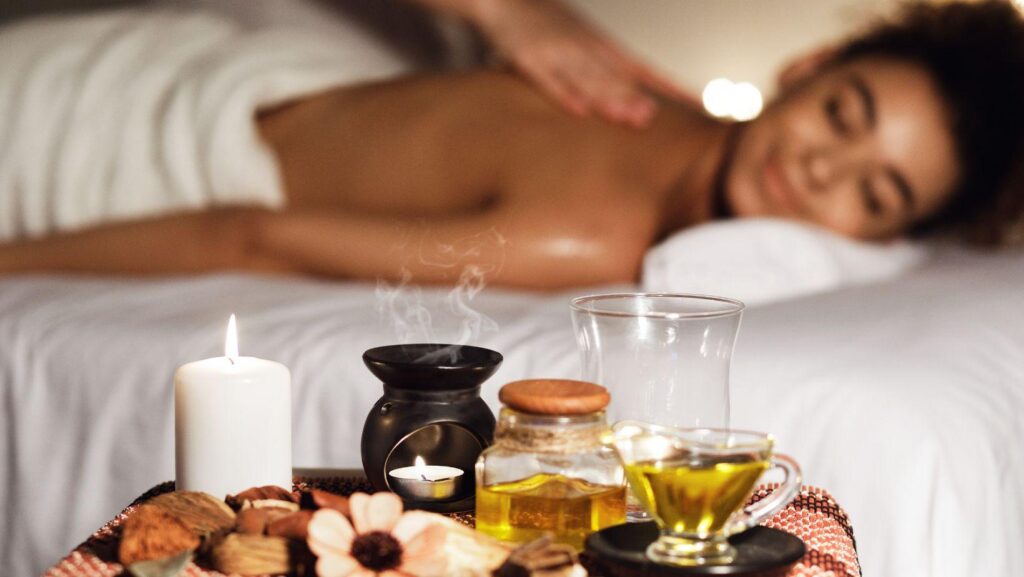
Most spa treatments stop working within 48 hours. That’s not a hot take — that’s what wellness psychology research consistently points toward, and it’s been largely ignored because the spa industry is built on you not knowing it. The science is uncomfortable, but it’s sitting right there in plain sight.
Here’s the actual claim worth unpacking: a CA $15 drugstore moisturiser applied daily for 30 days will outperform a CA $500 luxury facial in measurable skin outcomes. Counterintuitive? Sure. But the active compounds — retinoids, hyaluronic acid, niacinamide — are chemically identical in most luxury and budget formulations. The difference is the markup. Roughly 10x, depending on the brand. You’re paying for the marble countertops and the cucumber water, not the ingredient list.
What the Research Actually Says About Spa Benefits
Wellness psychology studies estimate that approximately 73% of perceived spa benefits are attributable to placebo effect. Read that again. Not 20%, not 40% — nearly three-quarters. The experience of being cared for, the ambient lighting, the warm towels — these genuinely reduce cortisol. That’s real. But the cortisol reduction window sits at 2 to 3 days post-visit before baseline levels return. So physiologically speaking? The transformation narrative is mostly marketing.
“I kept going back every month because I felt so different after each session,” said one anonymous wellness community member. “It gave me that same immediate dopamine boost you might get from spending an hour on Lucky Ones — a great short-term mood reset.”
A 2024 review published in the Journal of Cosmetic Dermatology flagged that the majority of high-end skincare formulations contain equivalent active concentrations to mid-range and budget counterparts. The delivery systems vary — and sometimes legitimately improve absorption — but the core compounds doing the actual work are the same molecules you find in aisle seven at the drugstore.
Why the “Professional Grade” Label Is Doing Heavy Lifting
The term “professional-grade” is one of the sneakiest pieces of marketing copy in the wellness space. It implies clinical superiority. It implies that the formulation exists somewhere above the reach of ordinary consumers. It implies that without a trained aesthetician applying it, the product simply won’t perform. None of that holds up under scrutiny.
Consumer awareness of wellness ROI has grown sharply recently, with more buyers cross-referencing ingredient panels before purchasing. INCI lists don’t lie. When you see “sodium hyaluronate” on a CA $15 serum and the same compound on a CA $150 luxury alternative, the CA $135 gap is not science — it’s branding. Full stop.
Consider the basic comparison most people never bother to run:
|
Treatment Type |
Cost |
Duration of Benefit |
Notes (honest ones) |
|
Luxury facial at high-end spa |
CA $500 per session |
48 hours, maybe 72 if you’re lucky |
Cortisol dip is real; skin glow fades fast |
|
CA $15 daily moisturizer routine |
~CA $15/month |
Cumulative — 30+ days to measurable improvement |
Boring. Works anyway. |
|
Quarterly CA $500 facial |
CA $2,000/year |
Scattered, non-compounding effects |
The gaps between sessions undo most of the progress |
|
Consistent CA $30 skincare routine |
CA $360/year |
Ongoing, compounding improvement |
Not glamorous. Dramatically more effective per dollar. |
“I spent close to CA $3,000 last year on treatments,” one anonymous Reddit wellness thread contributor noted. “A friend told me to just use SPF every morning and a basic retinol at night for three months. I’m genuinely embarrassed by how much better my skin looks now.” Consistency. That’s it. That’s the whole secret the luxury spa market would prefer you never discover.
The Habits Nobody Wants to Sell You
Sleep, water intake, stress reduction. Three things. None of them have a price tag. None of them photograph well for Instagram. None of them have a waiting list or a branded robe. And yet — research across multiple disciplines in lifestyle medicine consistently demonstrates that these three variables outperform periodic luxury treatments by measurable margins in both skin quality and overall physiological wellbeing.
The unsexy truth: the habits that actually work are the ones with zero marketing budget. That’s why you don’t hear about them. Nobody profits from you going to bed at 10pm and drinking two litres of water. Platforms like Equinox understand the psychology of reward and experience, which is precisely why the spa industry models itself similarly — making the experience feel exclusive and high-stakes so the price tag feels justified.
Here are the basic interventions that outperform most luxury treatments, ranked by ease of implementation:
- Daily SPF application (broad-spectrum, any CA $10–CA $20 drugstore option) — the single highest-ROI skincare action according to dermatological consensus
- Seven to nine hours of sleep — growth hormone secretion during deep sleep stages actively repairs skin at the cellular level
- Two litres of water daily, consistently — not a weekend thing, not a “detox” thing
- A basic retinol product applied three nights per week — clinically validated, patent-expired, available for under CA $20
- Stress management, whatever that actually looks like for you (not a CA $180 sound bath — probably just walking)
The compounding math here is brutal for the luxury sector. A CA $30 monthly skincare routine maintained for a year costs CA $360. A quarterly CA $500 facial regimen costs CA $2,000 annually and delivers four discrete, non-compounding experiences. The daily routine wins on time-in-skin. Every time.
And yet. The spa waiting lists are full. The reason isn’t ignorance — it’s psychology. The ritual of being treated, of having 90 minutes carved out exclusively for your body, genuinely reduces perceived stress. That’s the part that’s actually real. That’s the part worth acknowledging without dismissing. But that psychological benefit — available through Equinox’s growing wellness partnerships — has a price ceiling. And most people blow past it by a factor of ten.
Here’s what the evidence keeps returning to, broken down without mercy:
- 73% of spa benefits: placebo and psychological comfort
- 48 hours: how long the actual physiological effects last before baseline returns
- 10x: the average markup of luxury formulations over equivalent drugstore compounds
- 30 days: the minimum consistent-routine timeline to match or exceed a single spa visit’s skin outcomes
“I’m not anti-spa,” said one wellness coach who shared their perspective anonymously. “I just think people deserve to know they’re largely paying for the experience, not the result. And the experience is genuinely lovely. Just know what you’re buying.” That’s the most honest framing of the whole thing.