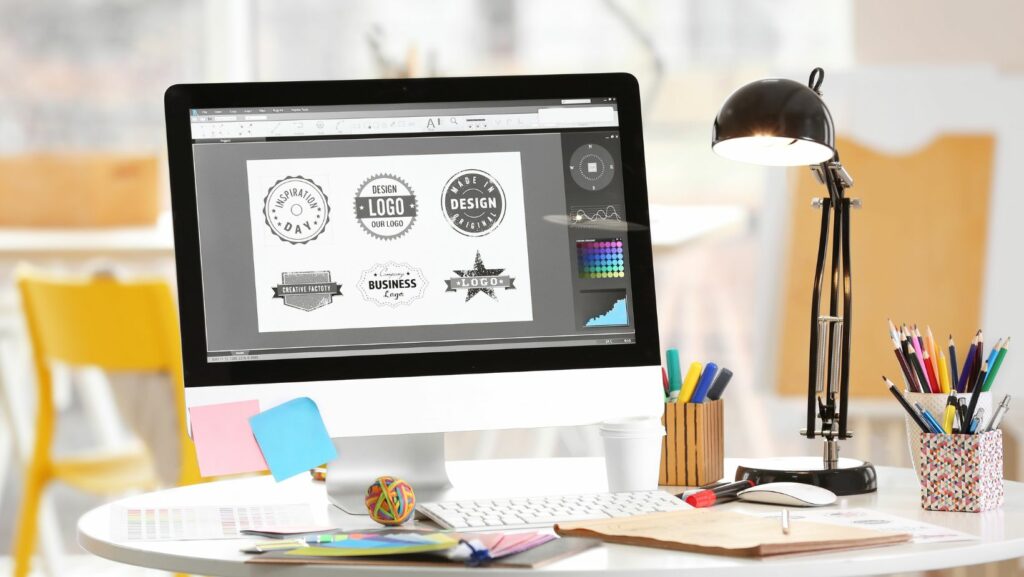
In today’s fast-paced work environment, office design isn’t just about aesthetics; it’s about creating spaces that inspire productivity and collaboration. Gone are the days of dull cubicles and uninspired break rooms. Instead, companies are embracing innovative design trends that transform workplaces into vibrant hubs of creativity.
Office Design Trends
Modern office design trends prioritize functionality and employee wellbeing. These trends reshape work environments into spaces that promote collaboration and productivity.
Emphasis on Flexibility
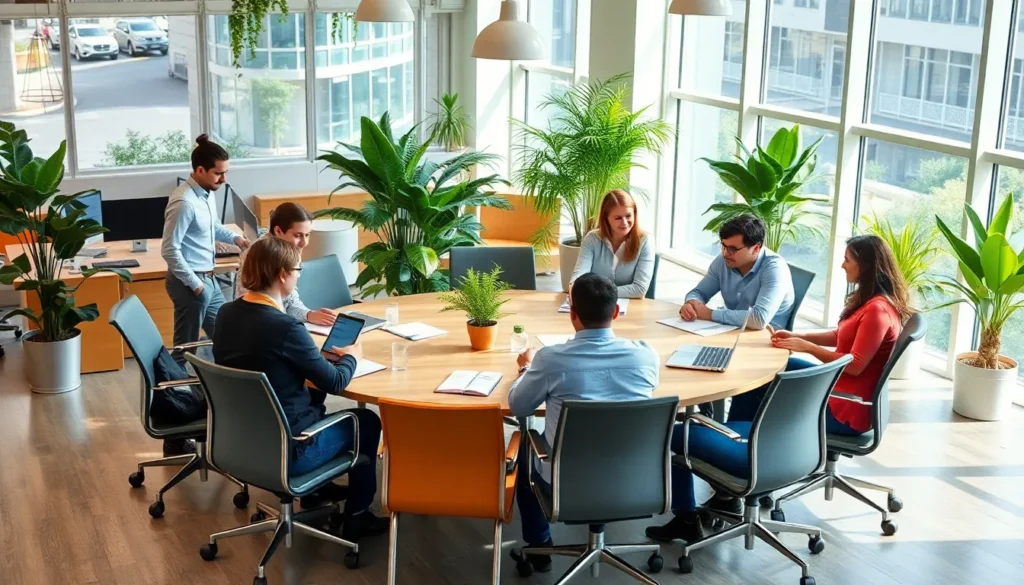
Flexibility stands out as a major focus in contemporary office design. Employers adopt adaptable workspaces that cater to diverse employee needs. Open layouts, movable furniture, and multi-use areas support various work styles. Companies find it beneficial to create zones for individual tasks alongside collaborative spaces. This approach accommodates remote workers, hot-desking options, and changing team sizes. Overall, the versatile design establishes a responsive work culture, enhancing employee satisfaction and productivity.
Biophilic Design Elements
Biophilic design elements significantly influence today’s office aesthetics. Integrating nature into workspaces fosters a calming environment. Plants, natural light, and organic materials contribute to this trend. Employees feel more relaxed and focused in spaces that mimic outdoor settings. Incorporating large windows or indoor gardens creates a sense of connection to nature. Additionally, biophilic design can enhance air quality and improve overall wellbeing. This trend aligns with the growing emphasis on sustainability and health in the workplace.
Impact of Technology on Office Design
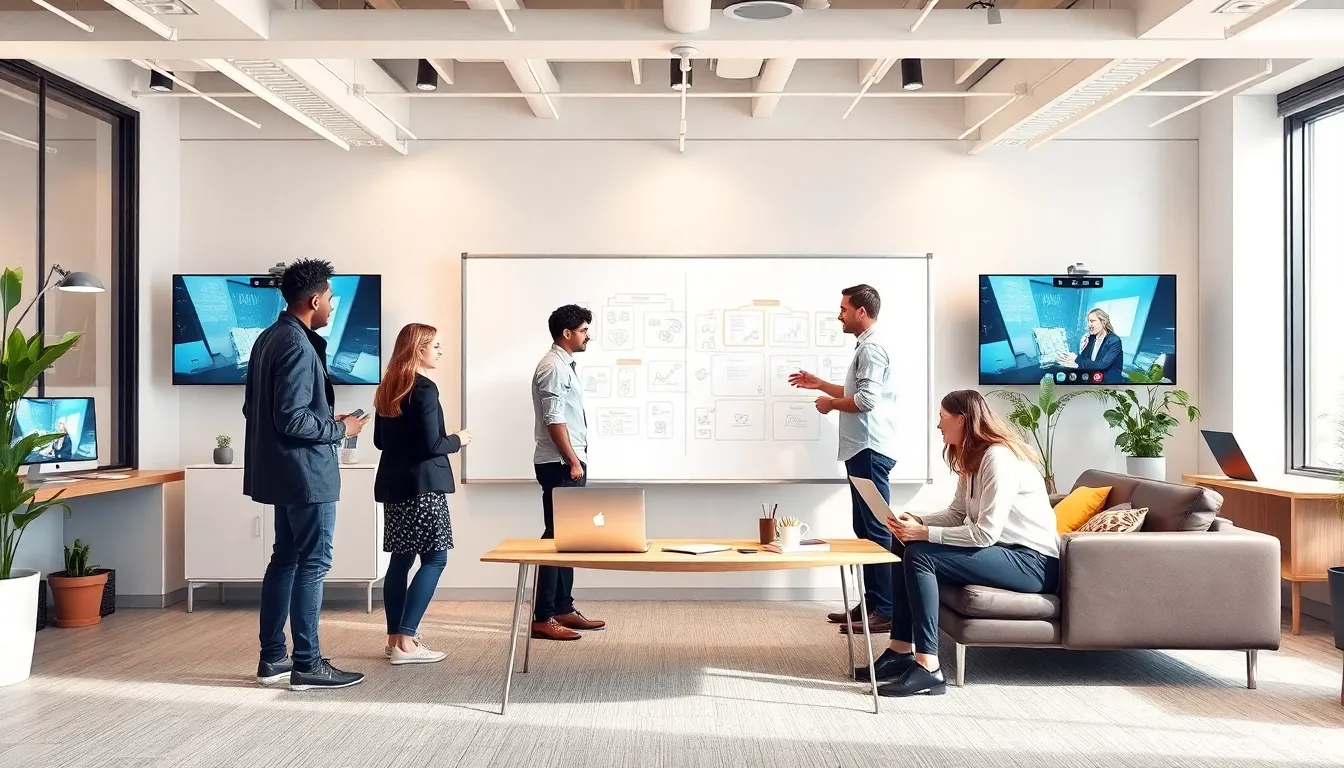
Technology significantly influences modern office design. Smart offices and automation enhance productivity and streamline workflows.
Smart Offices and Automation
Smart offices utilize the Internet of Things (IoT) to create connected environments. Sensors track occupancy and adjust lighting and temperature based on real-time data, optimizing comfort and energy use. Mobile apps allow employees to reserve spaces, controlling room bookings from their devices. This flexibility supports various working styles and facilitates collaboration. Enhanced security systems protect sensitive information while ensuring a safe workspace. Through automation, mundane tasks like managing office supplies become effortless, allowing staff to focus on more strategic activities.
Virtual Collaboration Spaces
Virtual collaboration spaces revolutionize how teams interact. Video conferencing technology enables seamless communication among remote employees, breaking down geographical barriers. Virtual reality tools offer immersive environments that enhance brainstorming sessions and creative collaboration. Integration of online whiteboards and collaborative software facilitates real-time idea sharing, making teamwork more efficient. Flexible design elements accommodate various layouts and group sizes, ensuring comfortable interaction regardless of participants’ locations. As remote work continues to rise, these spaces foster connection and engagement among teams, adapting to the evolving landscape of workplace interactions.
Sustainability in Office Design
Sustainability drives modern office design, emphasizing eco-friendly practices and the use of natural resources. This focus enhances both employee wellbeing and environmental health.
Eco-Friendly Materials
Sustainable materials like reclaimed wood, recycled metal, and low-VOC paints gain popularity in office design. Each choice contributes to a healthier indoor environment while reducing waste. Bamboo stands out for its rapid growth and durability, making it an excellent flooring option. Recycled carpets made from plastic bottles highlight sustainability and offer a unique aesthetic. Choosing these materials not only supports the environment but also creates inviting spaces for employees.
Energy Efficiency Practices
Energy efficiency remains a critical aspect of sustainable office design. Implementing LED lighting decreases energy consumption significantly while offering long-lasting brightness. Smart thermostats adjust heating and cooling based on occupancy, optimizing energy use throughout the day. Incorporating large windows increases natural light and reduces reliance on artificial lighting. These practices lead to lower energy costs and a smaller carbon footprint, aligning with current sustainability goals in modern workplaces.
The Future of Office Design
Emerging trends in office design reflect the changing landscape of work. These trends focus on fostering creativity, collaboration, and flexibility to meet diverse employee needs.
Hybrid Work Models
Hybrid work models reshape how companies design their workspaces. Businesses are adopting layouts that accommodate both remote and on-site employees. Workstations blend collaborative spaces with quiet zones to support various work styles. Flexible seating arrangements cater to changing team sizes by allowing employees to move freely. Technology integration, such as video conferencing tools, ensures seamless communication between in-office and remote workers. Companies increasingly recognize the importance of inclusivity in the design to enhance employee satisfaction and productivity.
Creative Spaces and Culture
Creative spaces play a crucial role in cultivating workplace culture. Open environments encourage interaction and collaboration among colleagues. Incorporating artistic elements, such as murals and sculptures, sparks inspiration and fosters innovative thinking. Designated areas for brainstorming and informal meetings facilitate idea sharing. Companies embrace playful designs with vibrant colors that stimulate creativity while reflecting their brand identity. A focus on cultural alignment within office design builds stronger connections among team members, enhancing overall engagement and morale.
Conclusion
Modern office design is rapidly evolving to meet the needs of today’s workforce. By embracing flexibility and functionality, companies are creating environments that enhance collaboration and productivity. The integration of technology and sustainability further elevates these spaces, making them not just places to work but also to thrive.
As organizations adapt to hybrid work models, the focus on inclusivity and employee wellbeing will continue to shape office design trends. Creative spaces and innovative layouts play a crucial role in fostering a vibrant workplace culture. Ultimately, the future of office design lies in its ability to inspire and connect individuals while prioritizing their comfort and efficiency.