
In a world where first impressions matter more than ever, packaging design is the unsung hero of consumer products. It’s not just about keeping items safe; it’s about catching the eye and winning hearts. With trends evolving faster than you can say “unboxing,” brands are getting creative in ways that are both clever and downright entertaining.
Packaging Design Trends
Packaging design trends reflect the dynamic nature of consumer preferences and market competition. Sustainable materials gain traction as brands prioritize eco-friendliness. Many companies now use biodegradable or recyclable materials, responding to consumer demand for environmentally responsible products.
Minimalist design remains popular, characterized by simplicity and clarity. Clean lines and limited color palettes create a sense of sophistication. This approach increases brand recognition and appeals to consumers seeking elegance in packaging.
Bold typography captures attention as brands strive to communicate messages effectively. Unique fonts and styles offer a distinctive identity that resonates with target audiences. Dynamic graphics also enhance visual impact, adding depth and engagement to packaging.
Interactive packaging engages consumers on a deeper level. Elements like QR codes or augmented reality features create a unique experience, fostering connection and loyalty. Such innovations encourage consumers to interact with products, enhancing brand interaction.
Personalized packaging experiences continue to rise. Customization options allow consumers to make products feel unique and tailored to their needs. This trend strengthens emotional connections and boosts brand loyalty.
Overall, packaging design trends reflect the industry’s shift toward innovation and consumer-centric approaches. Emphasizing sustainability, simplicity, and interactivity leads to stronger consumer engagement. Brands that recognize and adapt to these trends boost their market presence effectively.
Sustainability in Packaging Design
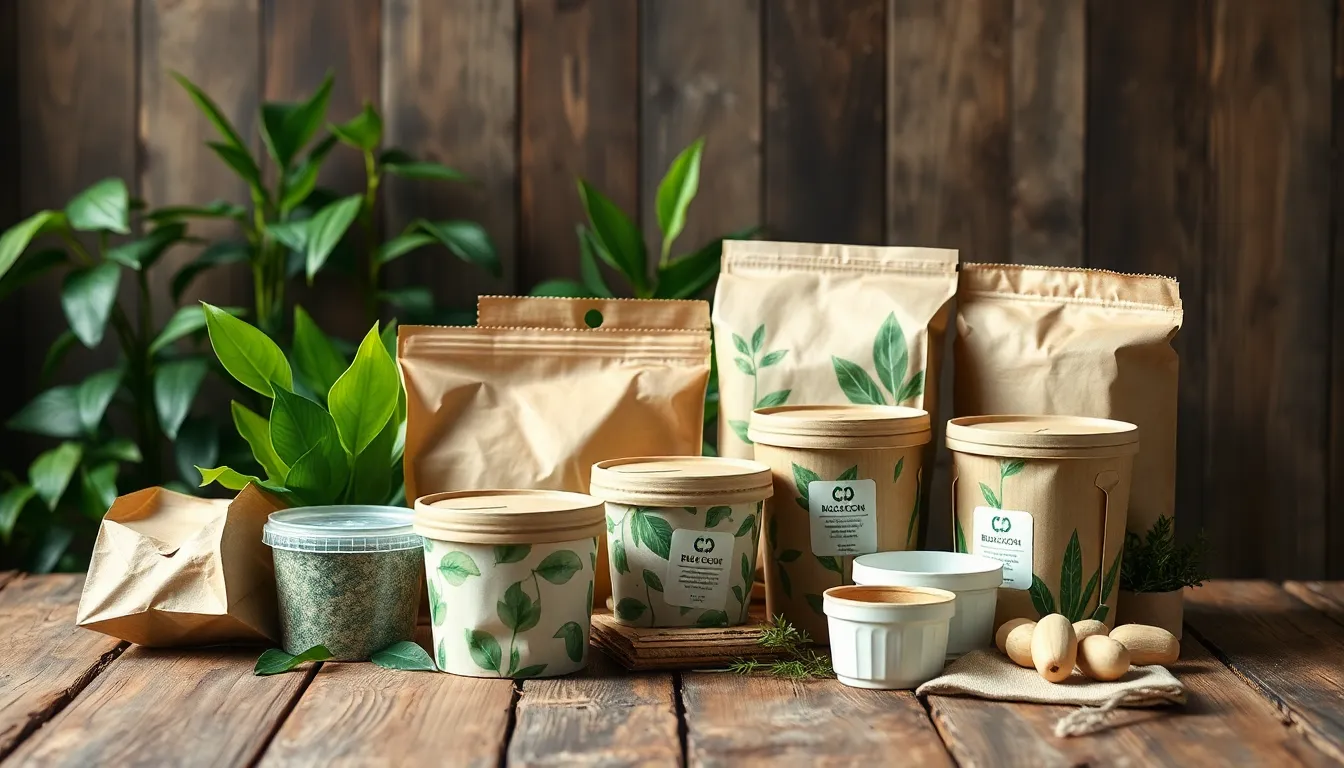
Sustainability significantly influences contemporary packaging design trends. Brands increasingly prioritize eco-friendly practices to appeal to environmentally conscious consumers.
Eco-Friendly Materials
Sustainable packaging utilizes materials such as recycled paper, plant-based plastics, and post-consumer recycled content. Many companies incorporate these options to reduce their carbon footprints. These materials not only lessen environmental impact but also resonate with consumers who value corporate responsibility. Some brands also leverage local sourcing to minimize transportation emissions. Innovations in material science continue to introduce biodegradable options, enhancing the eco-friendliness of product packaging while maintaining visual appeal.
Biodegradable Packaging Solutions
Biodegradable packaging solutions break down naturally, reducing landfill waste. Options like compostable films and containers made from cornstarch or bamboo display this trend effectively. These materials can decompose within months under proper conditions, providing an environmentally friendly alternative to traditional plastics. Some brands adopt designs that encourage users to compost the packaging after use. Awareness about the benefits of biodegradable solutions drives consumer preference, pushing brands to adopt these practices to thrive in an eco-conscious market. Companies embracing biodegradable options often witness increased customer loyalty and positive brand perception.
Minimalism in Packaging Design
Minimalism in packaging design emphasizes simplicity and elegance, making it an enduring trend. Brands seek to enhance brand recognition while captivating consumer interest through clean and striking visuals.
Clean Lines and Simplicity
Clean lines define minimalist packaging. This approach eliminates clutter, allowing key elements like logos and product information to take center stage. Consumers respond positively to designs that prioritize clarity, as they communicate trust and quality. Simplicity enables products to stand out on crowded shelves; brands that adopt this style often experience heightened visibility. Effective designs transmit messages without distractions, strengthening connections with consumers.
Effective Use of Negative Space
Negative space plays a crucial role in minimalist packaging. This technique involves balancing elements with empty areas, guiding the consumer’s focus to essential components. Brands that utilize negative space create a sense of sophistication. Clever use of this design principle can evoke emotions and highlights key attributes. The result engages consumers, allowing them to resonate with the product on a deeper level. Minimalist designs that incorporate negative space tend to foster a clean, modern aesthetic, appealing to today’s discerning shoppers.
Technology Influencing Packaging Design
Technology is reshaping packaging design, facilitating innovative solutions that enhance brand engagement and functionality.
Smart Packaging Innovations
Smart packaging incorporates technology to improve user experience and product quality. Sensors monitor freshness, preventing spoilage and ensuring optimal consumption. NFC (Near Field Communication) technology allows consumers to access product information through mobile devices, creating interactive experiences. Brands utilizing smart packaging often gain consumer trust by providing transparency and traceability. Examples include temperature-sensitive labels that change color upon exposure to improper conditions, effectively communicating product integrity.
Digital Printing Techniques
Digital printing techniques revolutionize the customization of packaging. Brands leverage these methods to achieve high-quality, vibrant graphics while minimizing waste. Short-run printing capabilities enable quick updates for marketing campaigns or seasonal packages. Utilizing water-based inks ensures a more environmentally friendly process. Cost-effective options attract small businesses seeking to differentiate their products. This flexibility in design allows brands to respond rapidly to market trends, fostering a connection with consumers through personalized packaging solutions.
Experiential Packaging Design
Experiential packaging design focuses on enhancing consumer interaction with products. Engaging experiences drive brand loyalty and create lasting impressions.
Engaging the Consumer Experience
Creating memorable moments engages consumers on emotional levels. Scented packaging or textures encourage tactile exploration, enhancing product appeal. Multi-sensory elements elevate experiences, allowing users to connect more deeply. For example, food brands often use scents to evoke hunger, enticing customers to purchase. Incorporating storytelling into packaging can draw consumers in, enriching their understanding of the brand. Successful packaging taps into the senses, delivering unique experiences that resonate with target audiences.
Interactive Packaging Features
Interactive packaging features foster deeper connections between products and consumers. QR codes on labels enable instant access to additional information or promotional offers. Engaging elements like augmented reality can bring packaging to life, providing entertaining experiences. Some brands utilize gamification, rewarding consumers for interactions with their package. Personalized messages or designs directly address consumers, enhancing brand attachment. As technology evolves, integrating these features into packaging continues to improve consumer satisfaction and brand perception.
Conclusion
The landscape of packaging design is continuously evolving. Brands that embrace these trends not only enhance their market presence but also foster deeper connections with consumers. By prioritizing sustainability and innovative designs, companies can create packaging that resonates with today’s eco-conscious shoppers.
Minimalist aesthetics and bold graphics capture attention while interactive elements elevate consumer engagement. As technology advances, the potential for personalized and experiential packaging grows, offering brands unique opportunities to stand out. Staying ahead of these trends will be essential for brands aiming to thrive in a competitive marketplace.